Phil Matthews: Strengthening Scotland’s Bus Network
Scotland’s economic, social and environmental challenges are often considered as separate issues. But we should be considering solutions that can help tackle these challenges together. Improving Scotland’s bus network is a great opportunity to do that and these benefits should be reflected in today’s Scottish Parliament debate on Strengthening Scotland’s Bus Network.
Bringing bus services back into public control and the £2 bus fare cap mark an important opportunity to improve affordability and encourage greater use, but cost is only one part of making buses an attractive alternative. Maximising the benefits of this investment will depend on ensuring services are available, accessible, interconnected, reliable, affordable and safe.
CERG’s new report, Building a Scotland Ready for the Future, sets out four practical recommendations to achieve this:
- Invest for the long term – reform the Bus Infrastructure Fund to enable multi-year investment in bus priority, dedicated bus lanes and sustainable travel corridors.
- Use public control to deliver better services – give local and regional transport authorities the powers and long-term funding to plan networks and secure socially necessary services, using franchising or regulation where appropriate, particularly in rural and poorly served communities.
- Create a genuinely integrated public transport network – making it easier to plan, pay for and interchange between different services and transport modes. New technology offers big opportunities to make multi-modal journeys seamless.
- Improve safety and accessibility – set minimum standards for passenger experience across bus and community transport services.
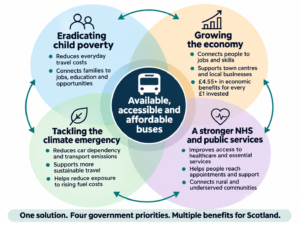
This is a central argument of our report: Scotland’s challenges are interconnected, and our solutions need to be too.
Better buses are not simply a transport investment. They are an opportunity to deliver multiple benefits for people, communities, the economy and the environment.
Phil Matthews, CERG Member